
The Menu Is Just the Entry Point: How Chef Partnerships Turn Farms into Destinations
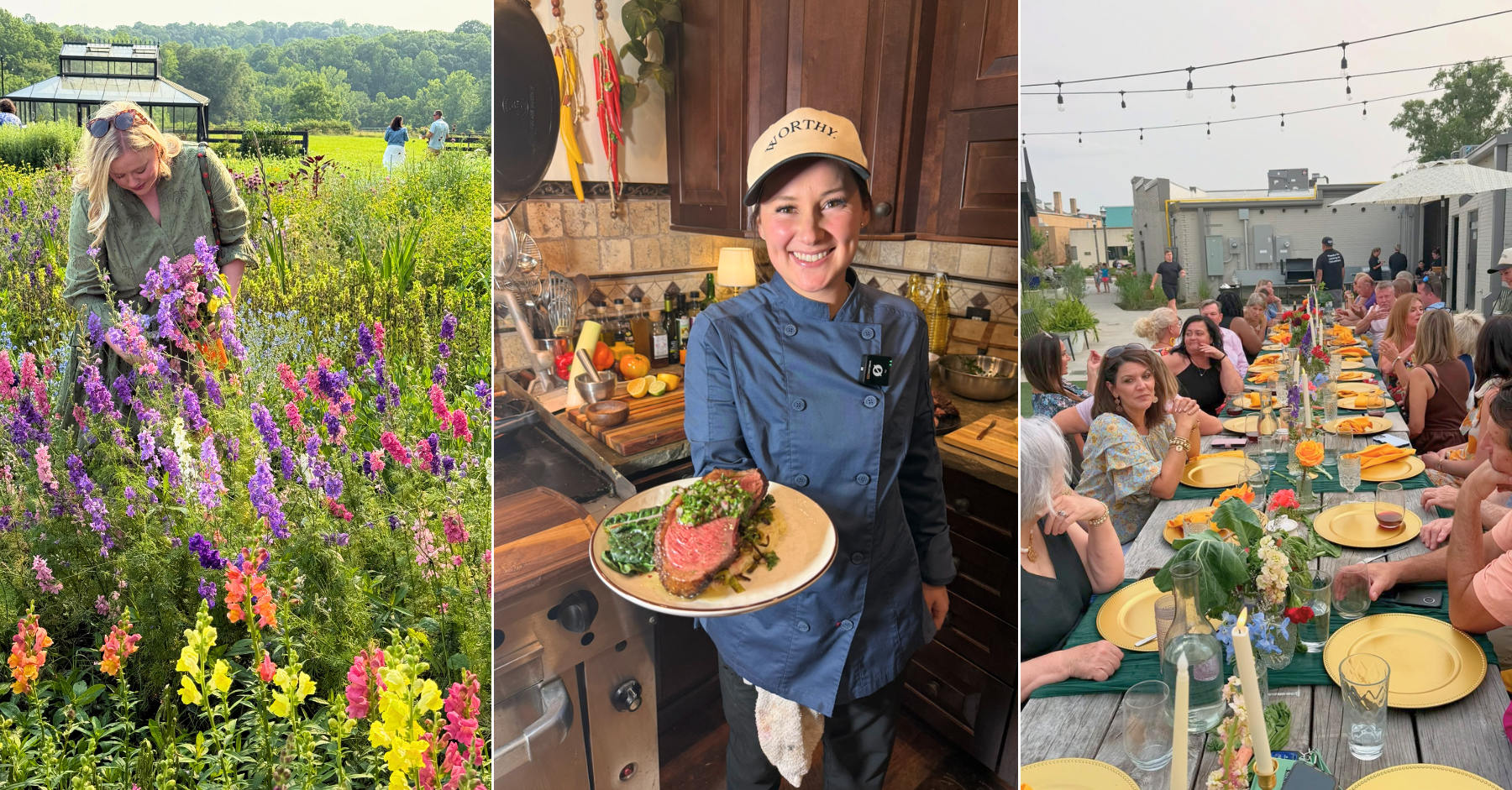
Many farmers and agritourism businesses approach chef partnerships as a way to extend their reach through food. In practice, the strongest partnerships do something more durable. They build momentum for a place.
I saw this clearly last year in York County, South Carolina.
One early summer Friday night, Five Blossoms Farm hosted a Sip & Stroll event at their farm. Lynsey Comalander cooked the meal. She’s a long-time culinary partner of the farm and collaborates with them across farm-to-table dinners, weddings, pizza nights, and seasonal programming.
At Five Blossoms, food is fully integrated into the experience. It shapes how people move through the farm, how long they stay, and how they remember the visit.
That night, I spent time talking with a group from Charlotte, NC who were visiting the farm for the first time. They weren’t rushing out after the meal. They were lingering, asking questions, and clearly connecting with the place.
I mentioned that Chef Lynsey would also be cooking the following night at a farm-to-table dinner hosted by the York County Ag + Art Tour. They bought tickets for Saturday night while still at the Sip & Stroll and I ran into them again the very next evening at the Ag + Art dinner.
This is what a well-designed ecosystem looks like in action.
What Happened Here
The value wasn’t limited to a single meal. The chef created continuity across experiences. One visit led naturally to another. A first impression turned into a weekend plan. An introduction became repeat engagement.
For agriculture marketers, this highlights an important dynamic.
Chef partnerships function as demand creation. They help people understand what’s happening on a farm in a way that feels approachable, memorable, and worth planning around. Chefs act as translators between agriculture and the consumer, turning production into experience.
Why This Matters for Farms and Destinations
Food collaborations are often treated as one-off moments: a dinner, a menu feature, a photo opportunity.
The operations seeing sustained results take a longer view. They work with chefs as collaborators and design multiple touch points over time.
That usually includes:
Meaningful access to the farm
Involvement across more than one event or season
Experiences that naturally connect and build on each other
This approach mirrors agriculture itself. It’s seasonal, limited, and shaped by timing. Urgency doesn’t need to be manufactured when experiences are designed with that reality in mind.
The Strategic Takeaway
When chef partnerships are approached transactionally, their impact ends when the event does. When they’re designed as part of a broader experience, they encourage longer stays, repeat visits, and deeper engagement with agriculture.
For farms, DMOs, and ag marketers, the opportunity isn’t about making agriculture aspirational. It’s about making it understandable, connected, and easy to re-engage with.
Chef partnerships, when designed intentionally, support exactly that.